
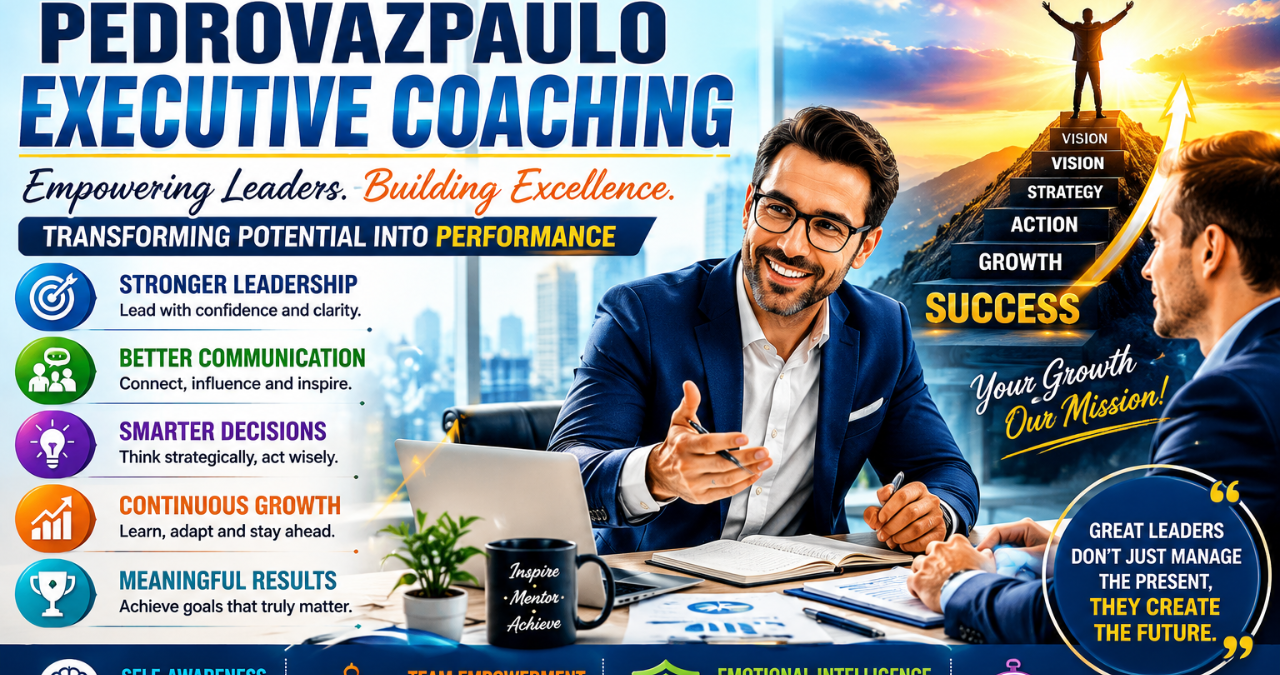

Pedrovazpaulo executive coaching has become a widely discussed topic among professionals, business leaders, entrepreneurs, and managers who want to improve their leadership skills and achieve greater success. In today’s competitive business environment, leaders are expected to make smart decisions, inspire teams, manage challenges, and drive organizational growth. This is where executive coaching plays an important role.
The concept of pedrovazpaulo executive coaching focuses on helping individuals unlock their full leadership potential through structured guidance, personalized development plans, and professional support. Whether someone is leading a small startup or managing a large corporation, executive coaching can provide valuable insights that improve performance and confidence.
This comprehensive guide explores everything you need to know about pedrovazpaulo executive coaching, including its benefits, methods, importance, and impact on modern leadership.
Understanding Pedrovazpaulo Executive Coaching
Executive coaching is a professional development process designed to help leaders improve their effectiveness. Pedrovazpaulo executive coaching emphasizes personal growth, leadership excellence, strategic thinking, and long-term success.
Unlike traditional training programs that focus on groups, executive coaching provides one-on-one support tailored to the specific needs of an individual leader.
The primary objectives often include:
- Improving leadership skills
- Enhancing communication abilities
- Strengthening decision-making capabilities
- Building emotional intelligence
- Increasing workplace productivity
- Supporting career advancement
- Encouraging personal and professional growth
As organizations continue to evolve, coaching has become a valuable tool for developing strong and adaptable leaders.
Why Executive Coaching Matters in Today’s Business World
The modern workplace is changing rapidly. Leaders face constant challenges such as technological advancements, remote work environments, global competition, and workforce diversity.
Because of these challenges, leaders cannot rely solely on technical expertise. They must also possess strong interpersonal and strategic skills.
Executive coaching helps leaders:
- Navigate complex situations
- Improve team performance
- Manage organizational change
- Handle workplace conflicts effectively
- Develop confidence during uncertain times
A skilled coach acts as a trusted partner who helps leaders identify strengths, address weaknesses, and achieve meaningful goals.
The Core Principles Behind Pedrovazpaulo Executive Coaching
Several foundational principles contribute to the effectiveness of executive coaching.
Personalized Development
Every leader has unique strengths, challenges, and goals. Coaching programs are customized to address individual needs rather than applying a one-size-fits-all approach.
Goal-Oriented Learning
Successful coaching focuses on measurable outcomes. Leaders work toward clearly defined objectives that align with personal and organizational goals.
Continuous Improvement
Growth does not happen overnight. Coaching encourages ongoing learning, reflection, and improvement over time.
Accountability
A coach helps leaders stay committed to their development plans by providing regular feedback and support.
Self-Awareness
One of the most valuable aspects of coaching is helping leaders understand their behaviors, habits, and leadership styles.
Key Benefits of Pedrovazpaulo Executive Coaching
The advantages of executive coaching extend far beyond individual performance.
Enhanced Leadership Skills
Strong leadership is essential for business success. Coaching helps leaders:
- Inspire employees
- Build trust
- Delegate effectively
- Create positive workplace cultures
Improved Communication
Communication plays a major role in leadership effectiveness. Coaching helps professionals:
- Listen actively
- Deliver clear messages
- Handle difficult conversations
- Improve presentation skills
Better Decision-Making
Leaders often face complex decisions that impact entire organizations. Coaching helps improve:
- Critical thinking
- Problem-solving abilities
- Strategic planning
- Risk assessment
Increased Confidence
Many professionals struggle with self-doubt despite having strong abilities. Coaching helps build confidence by reinforcing strengths and addressing limiting beliefs.
Stronger Emotional Intelligence
Emotionally intelligent leaders understand their own emotions and those of others. This leads to:
- Better relationships
- Improved teamwork
- Higher employee satisfaction
- Greater workplace harmony
How the Coaching Process Typically Works
Although coaching programs may vary, most follow a structured process.
Initial Assessment
The journey begins with understanding the client’s current situation.
Areas often evaluated include:
- Leadership style
- Career goals
- Communication skills
- Workplace challenges
- Personal strengths
Goal Setting
Specific objectives are established based on the assessment results.
Examples include:
- Becoming a more effective leader
- Improving team performance
- Managing workplace stress
- Preparing for promotion
Coaching Sessions
Regular meetings provide opportunities to discuss progress, challenges, and new strategies.
These sessions may involve:
- Reflection exercises
- Leadership discussions
- Action planning
- Feedback analysis
Progress Evaluation
Results are monitored regularly to ensure continued growth and development.
Essential Leadership Skills Developed Through Executive Coaching

Pedrovazpaulo Executive Coaching Executive coaching helps leaders strengthen a wide range of competencies.
Strategic Thinking
Strategic leaders focus on long-term success rather than short-term gains.
They learn to:
- Analyze market trends
- Identify opportunities
- Anticipate challenges
- Create effective plans
Team Management
Strong teams are built through effective leadership.
Coaching helps leaders:
- Motivate employees
- Resolve conflicts
- Encourage collaboration
- Improve accountability
Time Management
Leaders often juggle multiple responsibilities.
Coaching supports:
- Better prioritization
- Efficient scheduling
- Reduced procrastination
- Increased productivity
Adaptability
Businesses constantly face change.
Adaptive leaders can:
- Embrace innovation
- Manage uncertainty
- Respond quickly to challenges
- Lead transformation initiatives
The Role of Emotional Intelligence in Executive Success
Emotional intelligence has become one of the most important leadership traits.
It includes:
- Self-awareness
- Self-regulation
- Motivation
- Empathy
- Social skills
Executive coaching helps leaders develop these abilities through reflection and practical exercises.
Benefits of emotional intelligence include:
- Stronger relationships
- Better teamwork
- Improved conflict resolution
- Higher employee engagement
When leaders understand emotions effectively, they create healthier and more productive workplaces.
Industries That Benefit from Executive Coaching
Executive coaching is valuable across many industries.
Corporate Business
Managers and executives use coaching to improve leadership performance and organizational effectiveness.
Technology
Technology leaders often require support in managing innovation, rapid growth, and team dynamics.
Healthcare
Healthcare professionals benefit from coaching when managing complex teams and patient-focused environments.
Education
School administrators and educational leaders use coaching to strengthen leadership and communication.
Entrepreneurship
Business owners often seek coaching to improve strategic planning and leadership capabilities.
Common Challenges Addressed Through Coaching
Many professionals seek coaching because they face specific challenges.
Some of the most common include:
- Leadership transitions
- Workplace stress
- Team conflicts
- Lack of confidence
- Communication difficulties
- Performance improvement needs
- Career advancement goals
Coaching provides practical solutions while helping leaders develop long-term skills.
Comparing Executive Coaching and Traditional Training
| Feature | Executive Coaching | Traditional Training |
|---|---|---|
| Learning Style | Personalized | Group-based |
| Focus | Individual goals | General topics |
| Feedback | Continuous | Limited |
| Flexibility | High | Moderate |
| Accountability | Strong | Lower |
| Customization | Extensive | Minimal |
| Long-Term Support | Yes | Usually No |
This comparison highlights why many organizations invest in coaching programs for leadership development.
Building a Culture of Leadership Excellence
Organizations that invest in leadership development often experience better outcomes.
Benefits include:
- Higher employee engagement
- Improved productivity
- Stronger workplace culture
- Better retention rates
- Increased innovation
When leaders improve, their teams often improve as well. This creates a positive cycle that benefits the entire organization.
Executive coaching supports the creation of leadership cultures where learning, growth, and collaboration are encouraged.
Future Trends in Executive Coaching
The coaching industry continues to evolve alongside modern business practices.
Emerging trends include:
Virtual Coaching
Online coaching sessions make professional development more accessible.
Data-Driven Development
Organizations increasingly use assessments and analytics to support coaching outcomes.
Leadership Agility
Future leaders must adapt quickly to changing business conditions.
Well-Being Integration
Coaching programs are placing greater emphasis on mental wellness, resilience, and work-life balance.
These trends are helping executive coaching remain relevant in a rapidly changing world.
How to Maximize Results from Executive Coaching
Leaders can achieve greater success by following several best practices.
Be Open to Feedback
Constructive feedback provides valuable insights for improvement.
Set Clear Goals
Specific objectives help maintain focus and direction.
Take Action
Growth occurs when new strategies are applied consistently.
Remain Committed
Long-term development requires patience and persistence.
Embrace Continuous Learning
The most successful leaders never stop learning and improving.
Conclusion
Pedrovazpaulo executive coaching represents a powerful approach to leadership development in today’s fast-moving business world. By focusing on personalized growth, self-awareness, strategic thinking, communication, and emotional intelligence, coaching helps leaders reach their highest potential.
Organizations increasingly recognize that strong leadership directly impacts productivity, innovation, and long-term success. Through structured guidance and ongoing support, pedrovazpaulo executive coaching empowers professionals to overcome challenges, strengthen their abilities, and lead with greater confidence.
Whether you are an entrepreneur, manager, executive, or aspiring leader, investing in leadership development can create lasting benefits for both personal and professional success. As workplaces continue to evolve, the value of pedrovazpaulo executive coaching will likely remain an important part of building capable, resilient, and future-ready leaders.
Ultimately, those who commit to continuous growth and learning through pedrovazpaulo executive coaching are often better prepared to achieve meaningful results, inspire others, and create a lasting positive impact in their organizations and careers.