
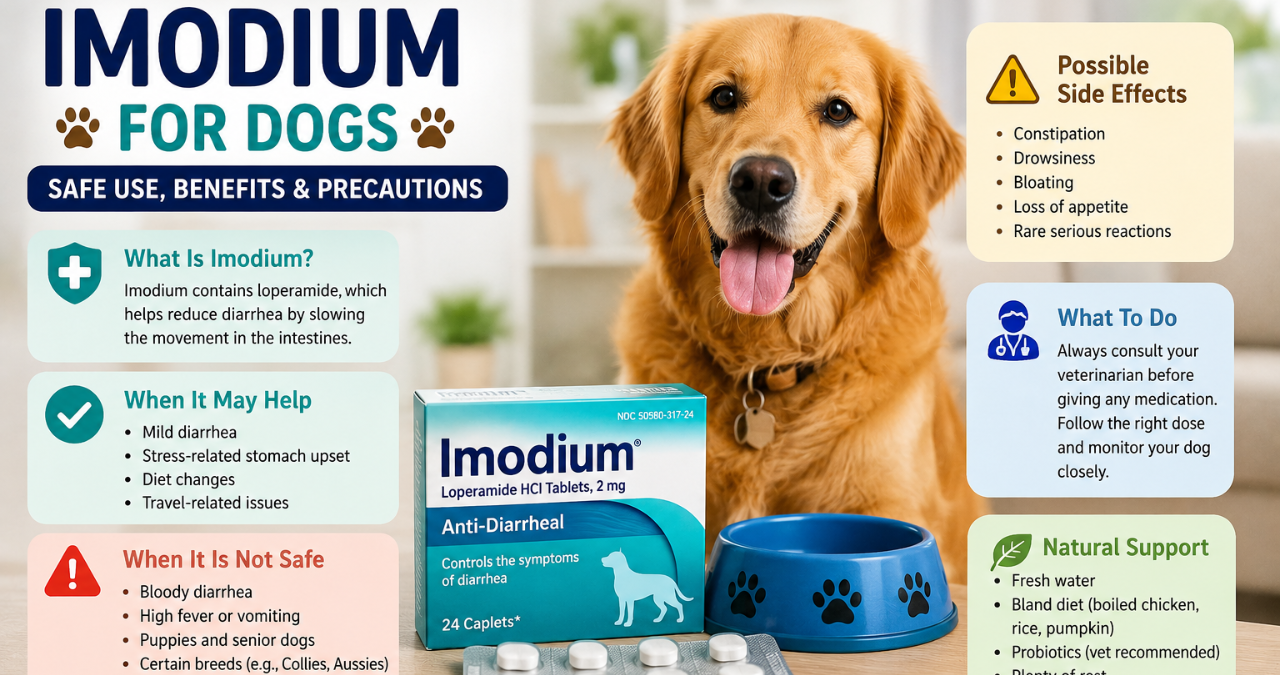

Imodium for dogs is a topic that many pet owners search for when their furry friend suddenly develops diarrhea or stomach trouble. Seeing a dog become sick can be worrying, especially when the symptoms appear without warning. Many people already have Imodium in their medicine cabinet and wonder if it can help their pet as well.
The answer is not always simple. While some veterinarians may recommend this medicine in certain situations, it is not safe for every dog or every type of stomach problem. Understanding when it can help, when it can be harmful, and when to call a veterinarian is important for every responsible dog owner.
This guide explains everything you need to know in clear and simple language so that you can make informed decisions for your pet’s health.
What Is Imodium?
Imodium is a medicine that people often use to slow down diarrhea. Its active ingredient is loperamide, which works by reducing movement in the intestines. When the intestines move more slowly, the body has more time to absorb water, and stools become firmer.
For humans, it is a common over-the-counter medicine. For dogs, however, the situation is different because not every dog reacts to the medication in the same way.
Some veterinarians prescribe it under controlled conditions, while others prefer different treatments depending on the cause of the problem.
Because of these differences, pet owners should never assume that a medicine that works for humans will automatically be safe for animals.
Why Dogs Get Diarrhea
Before thinking about treatment, it helps to understand why diarrhea happens in the first place.
Dogs can develop stomach upset for many reasons, including:
- Eating spoiled food
- Sudden diet changes
- Food allergies
- Stress or anxiety
- Intestinal parasites
- Viral infections
- Bacterial infections
- Eating garbage outdoors
- Swallowing toys or foreign objects
- Side effects from medications
Sometimes diarrhea lasts only a few hours and disappears on its own. In other situations, it can be a sign of a more serious illness that requires immediate veterinary care.
Finding the real cause is often more important than simply stopping the diarrhea.
Can Dogs Take Imodium?
This is the question most pet owners ask first.
The short answer is yes, some dogs can take Imodium under veterinary guidance. However, not all dogs are suitable candidates for this medication.
Veterinarians may occasionally recommend it for short-term cases of uncomplicated diarrhea. If the dog is otherwise healthy, active, and eating normally, it may sometimes be part of the treatment plan.
Still, there are many situations where the medication should be avoided entirely.
That is why professional advice matters so much. A medicine that helps one dog could create serious problems for another.
When Veterinarians May Recommend Imodium
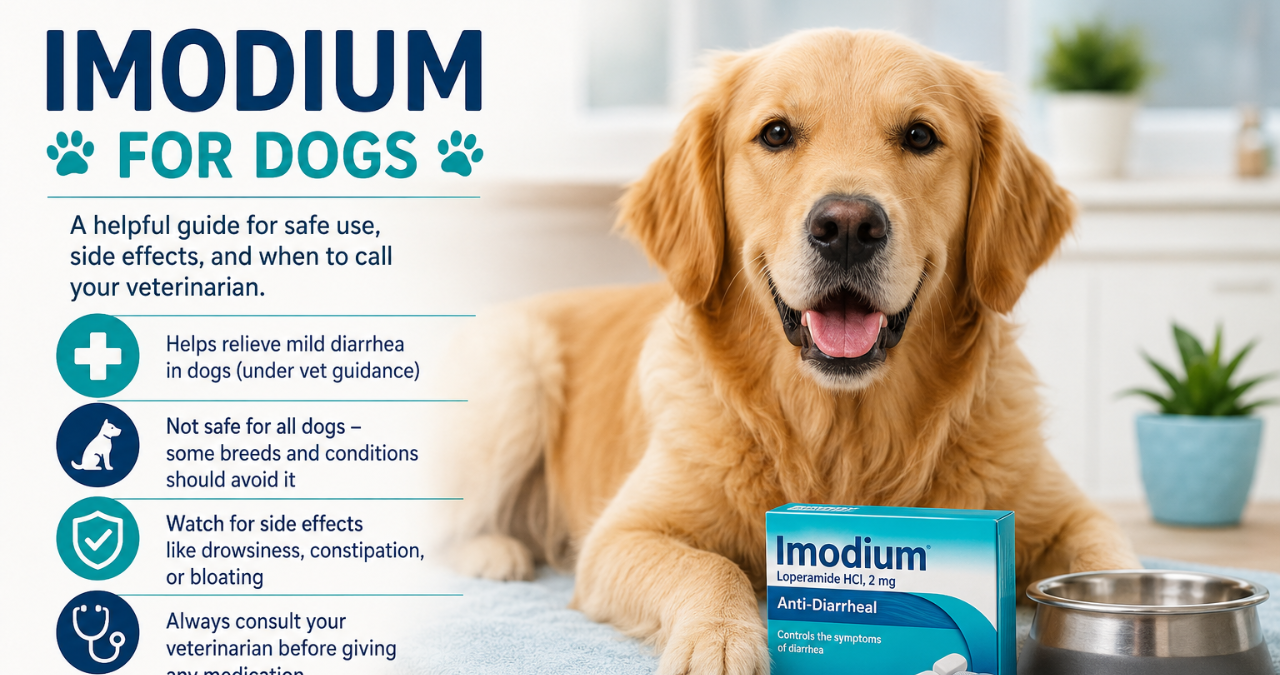
Imodium for dogs There are situations where a veterinarian may decide that the medicine is appropriate.
Examples include:
- Mild digestive upset
- Temporary diarrhea caused by stress
- Minor reactions to dietary changes
- Short-term digestive irritation
For example, some dogs become nervous during travel, boarding, or moving to a new home. Stress can affect the digestive system just as it affects people.
In carefully selected cases, treatment may help the dog recover more comfortably while the body heals naturally.
However, the medicine should never replace proper diagnosis when symptoms continue or become severe.
Dogs That Should Not Take Imodium
Here’s where things become especially important.
Some breeds and medical conditions increase the risk of side effects. Certain dogs process the medication differently and may experience dangerous reactions.
Veterinarians often avoid using it in:
- Puppies
- Elderly dogs with health problems
- Pregnant dogs
- Nursing mothers
- Dogs with liver disease
- Dogs with breathing problems
- Dogs with intestinal blockages
- Dogs with head injuries
Several herding breeds may carry a genetic mutation that affects how certain medicines are handled by the body.
These breeds include:
| Breed | Extra Caution Needed |
|---|---|
| Collie | Yes |
| Australian Shepherd | Yes |
| Shetland Sheepdog | Yes |
| Border Collie | Sometimes |
| Old English Sheepdog | Sometimes |
Dogs with this genetic issue can experience severe side effects even from normal doses.
Because of this risk, veterinarians often recommend alternative treatments.
Signs That Require Immediate Veterinary Care
Not every case of diarrhea is a simple stomach upset.
Some warning signs suggest that professional care is needed right away.
Contact a veterinarian if your dog has:
- Blood in the stool
- Black-colored stool
- Severe vomiting
- Extreme weakness
- High fever
- Difficulty breathing
- Abdominal swelling
- Loss of consciousness
- Refusal to drink water
- Symptoms lasting longer than two days
Young puppies deserve special attention because dehydration can happen quickly.
A dog that becomes dehydrated may show:
- Dry gums
- Sunken eyes
- Lethargy
- Reduced skin elasticity
- Loss of energy
Early treatment often leads to faster recovery and lower medical costs.
Possible Side Effects
Like all medicines, side effects are possible.
Some dogs tolerate the medicine well, while others react poorly.
Common side effects include:
- Sleepiness
- Constipation
- Bloating
- Mild stomach discomfort
- Reduced appetite
More serious side effects can include:
- Severe constipation
- Difficulty walking
- Excessive tiredness
- Tremors
- Changes in behavior
If unusual symptoms appear after taking medication, veterinary advice should be sought immediately.
Monitoring your dog closely during treatment is always a smart idea.
Safe Alternatives for Mild Digestive Upset
Interestingly, many mild stomach problems improve without medication at all.
Veterinarians often recommend supportive care first.
Helpful measures may include:
- Providing fresh water
- Feeding bland foods
- Offering smaller meals
- Avoiding fatty treats
- Allowing rest and relaxation
Common bland foods include:
- Plain boiled chicken
- White rice
- Plain pumpkin puree
- Boiled turkey
- Veterinary-approved digestive diets
These foods are gentle on the stomach and may help the digestive system recover naturally.
Sometimes the simplest solutions are surprisingly effective.
The Importance of Hydration
When a dog has diarrhea, water loss becomes a major concern.
Even mild dehydration can make recovery slower and more uncomfortable.
Pet owners should encourage drinking by:
- Keeping fresh water available
- Cleaning water bowls regularly
- Offering ice cubes
- Providing water in multiple locations
Signs of good hydration include:
- Moist gums
- Bright eyes
- Normal energy levels
- Regular urination
Hydration supports nearly every function in the body and is one of the most important parts of recovery.
Foods to Avoid During Recovery
A recovering stomach needs time to settle.
Some foods can make symptoms worse.
Avoid giving:
- Fried foods
- Spicy foods
- Dairy products
- Fatty table scraps
- Bones
- Rich treats
- Large meals
Dogs may act hungry during recovery, but overfeeding too quickly can restart digestive problems.
Patience often pays off.
Questions to Ask Your Veterinarian
If your veterinarian suggests treatment, asking questions can help you feel more confident.
Helpful questions include:
- What caused the diarrhea?
- Is medication truly necessary?
- Are there safer alternatives?
- How long should treatment continue?
- What warning signs should I watch for?
Good communication creates better outcomes for pets and owners alike.
Veterinarians appreciate informed questions because they show commitment to responsible pet care.
Preventing Future Digestive Problems
Nobody enjoys cleaning up after a sick dog.
Fortunately, many digestive problems can be prevented.
Simple prevention tips include:
- Feed a consistent diet.
- Avoid sudden food changes.
- Keep garbage secured.
- Schedule regular veterinary visits.
- Maintain parasite prevention programs.
- Keep harmful foods out of reach.
- Provide clean drinking water daily.
Small habits make a big difference over time.
Healthy routines often lead to healthier dogs.
Myths and Misunderstandings
There are many myths surrounding pet medications.
One common myth is that if a medicine is sold without a prescription for humans, it must also be safe for animals.
That simply is not true.
Another myth is that stopping diarrhea immediately is always the goal.
Sometimes diarrhea is actually the body’s way of removing harmful substances from the digestive system.
Stopping it too quickly may occasionally create additional problems.
Treatment should focus on the cause, not only the symptom.
The Role of Professional Guidance
Modern veterinary medicine offers many options for digestive issues.
What works for one dog may not work for another.
Age, breed, weight, medical history, and current symptoms all play important roles in choosing the right treatment.
Veterinary professionals consider all these factors before recommending medication.
Their experience helps reduce risks and improve recovery outcomes.
When in doubt, a quick phone call to a clinic can provide valuable peace of mind.
Final Thoughts on Imodium for Dogs
Understanding imodium for dogs helps pet owners make safer and smarter decisions when stomach problems appear. Although some veterinarians may recommend it in specific situations, it is not a universal solution and should never be given without proper guidance.
Every dog is unique, and what helps one pet may harm another. Paying attention to symptoms, maintaining hydration, and seeking professional advice when necessary remain the best ways to protect your companion’s health.
With careful observation and responsible care, most dogs recover quickly and return to their happy, tail-wagging selves. Knowledge, patience, and timely veterinary support make all the difference when dealing with imodium for dogs.